During the academic year 2005/2006, a Czech philology course was established at the Racibórz university, and over the years its students and lecturers were and still are extremely active and well-known community. On 21 March 2026, a formal gathering was held to mark the 20th anniversary of Czech studies in Racibórz. On 1 October 2005, a study programme was launched at the Institute of Modern Languages of the Higher Vocational School in Racibórz (currently the Department of Languages and Translation Studies at the University of Applied Sciences) which was a Philology program with a specialization in Czech Philology (full-time bachelor’s studies). The academic supervisor of the specialization was Professor Mieczysław Balowski, who also served as the Institute’s first director.
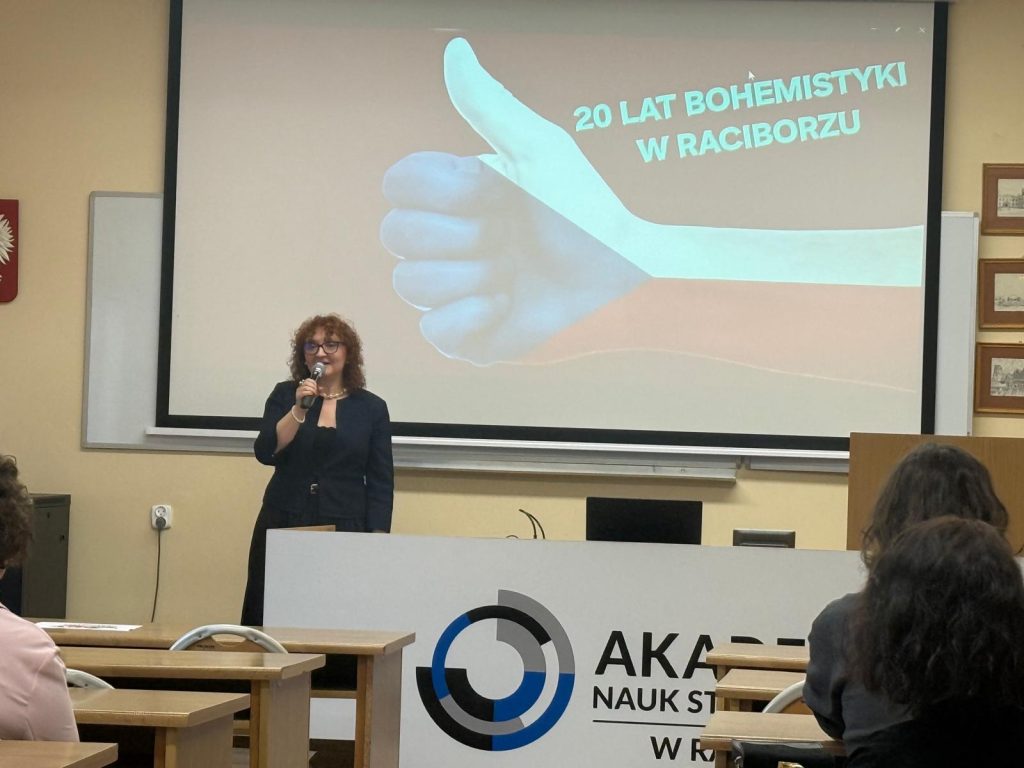
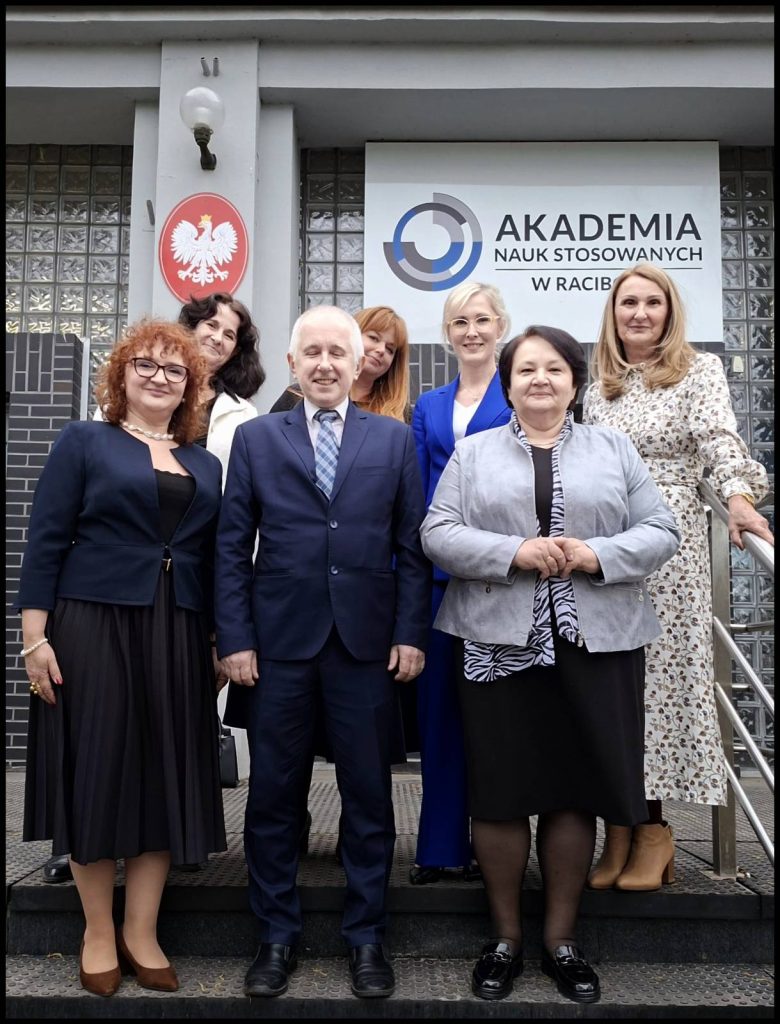
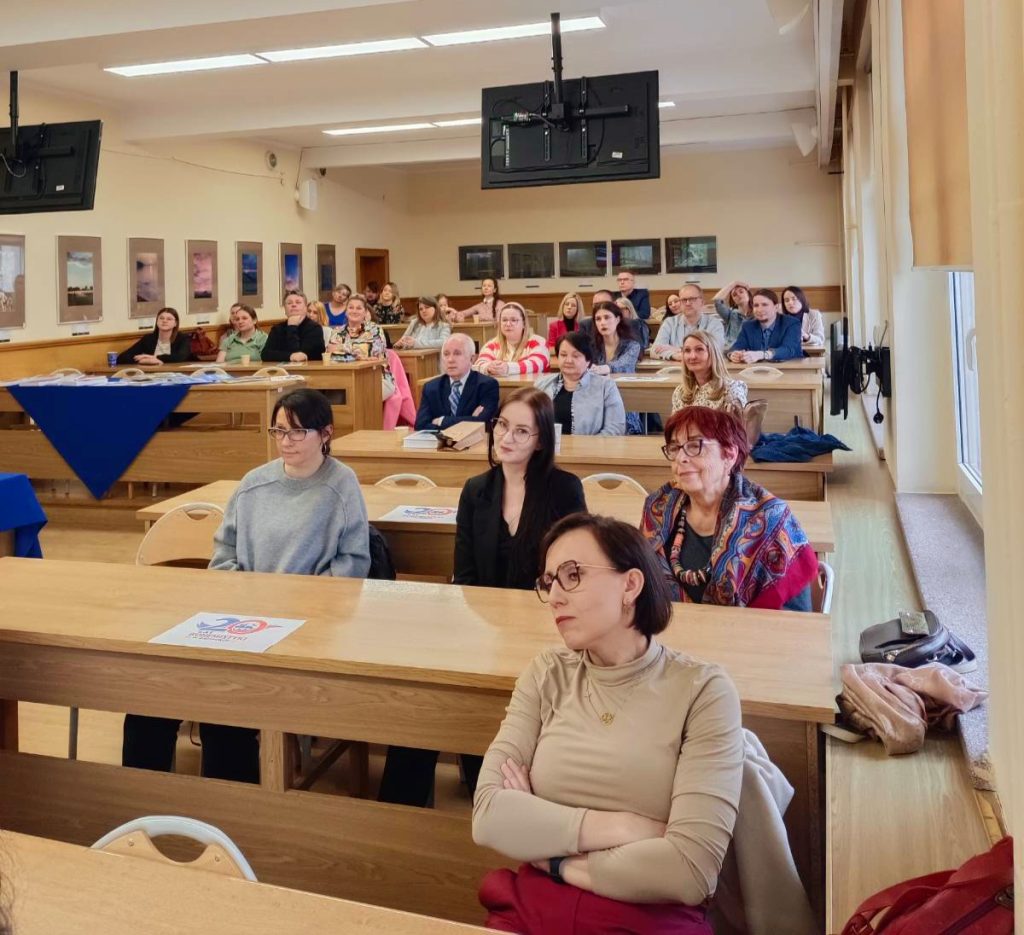
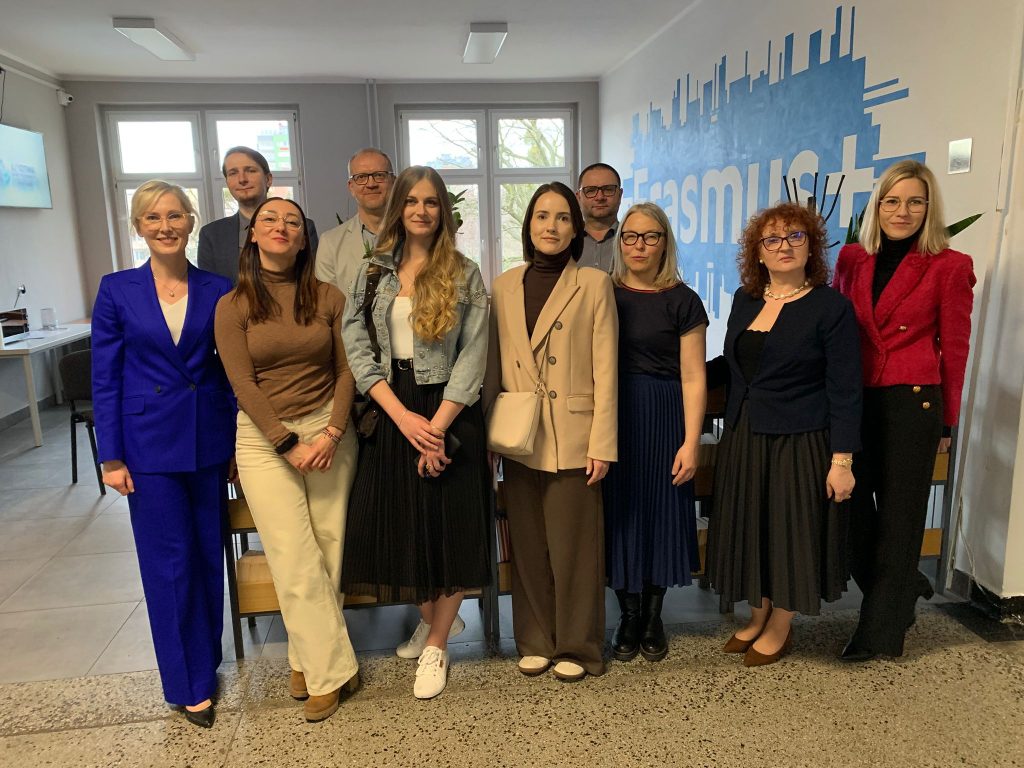
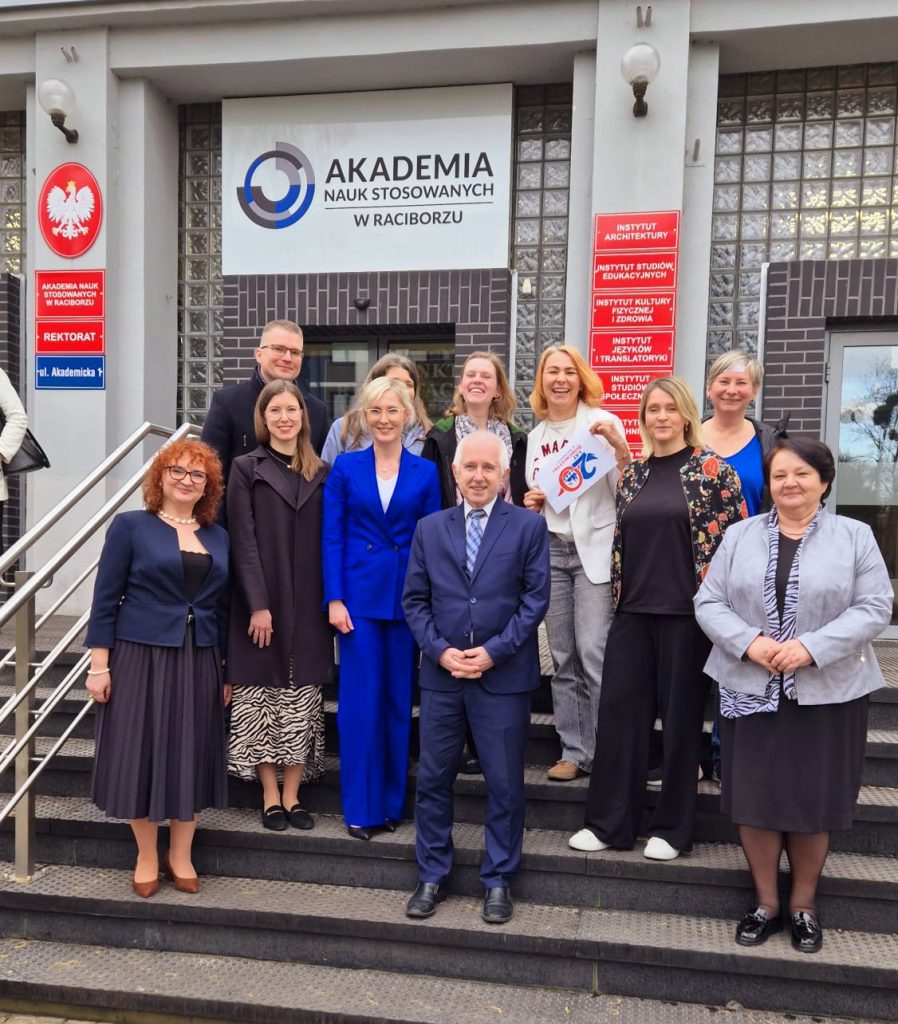
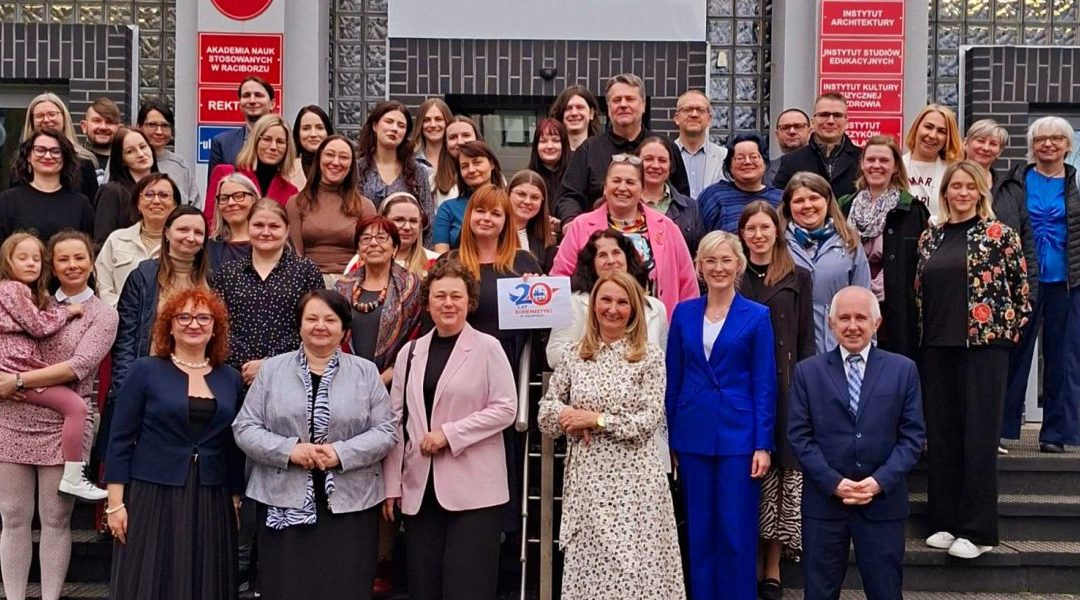
The anniversary celebration was attended by Dr. Estera Jasita, Director of the Institute of Languages and Translation Studies, as well as lecturers who had helped shape the program over the years: Professor Mieczysław Balowski, Dr. Grażyna Balowska, Dr. Ivana Dobrotov, Dr. Joanna Maksym-Benczew, Dr. Justyna Pietrzykowska, Dr. Štěpánka Kozderová Velčovská, Dr. Jindřiška Svobodová, Dr. Alina Zimna, MSc. Debora Kosel-Strózik, MSc. Anna Lara, and MSc. Anna Sterańczak, who for many years provided organizational support for the Institute, the program, and its initiatives. A large group of graduates and current students also attended the celebration, for many of whom it was an opportunity to meet again after many years and revive cherished memories.
The event was hosted by Dr. Joanna Maksym-Benczew and Dr. Justyna Pietrzykowska, recalling the extensive academic and teaching activities carried out during the twenty years of the program’s existence. These included the international scientific conferences “Czech Language and Literature,” held every two years until 2016 and devoted to a variety of themes such as the European cultural context, interaction, historical events, and everyday experience. These conferences served as an important forum for the exchange of ideas and integration of scholars from the Czech Republic, Poland, and Central Europe, resulting in highly regarded conference publications.
In partnership with Palacký University Olomouc, the Institute implemented the project “Czech-Polish Lexicographic Centre,” financed by the European Regional Development Fund. The project resulted in several international conferences, Czech-Polish workshops, the acquisition of specialized computer equipment for the Institute, scientific and lexicographic publications, and, notably, the comprehensive Polish-Czech Dictionary of Integrated Rescue System Terminology in Crisis Situations.
The educational process was further enriched through international student scientific conferences supporting the aspirations of young Czech Studies scholars, also accompanied by conference publications. Other initiatives included terminology and translation workshops at the Contact Point of the Silesian Border Guard Unit for the Joint Polish-Czech Facility in Chotěbuz, at the Police Academy and Secondary Police School of the Ministry of the Interior in Holešov, and at the Ostrava Fine Arts Gallery.
Students also participated in annual language and translation classes at Palacký University Olomouc and the University of Ostrava, as well as numerous study trips to Prague, Olomouc, Opava, Ostrava, Hradec nad Moravicí, Chotěbuz, Holešov, and Uherské Hradiště. These trips aimed to deepen their knowledge of Czech culture and history, improve language skills, and enable participation in performances at Czech theatres in Ostrava, Opava, and Prague.
Students of Czech Studies in Racibórz, together with students from Palacký University Olomouc and the University of Prešov in Slovakia, took part in the Blended Intensive Programme (BIP) “Language, Culture and Literature in the Polish-Czech-Slovak Borderland.” The week-long workshops in Racibórz focused on issues of cross-border cooperation, the cultural and linguistic characteristics of the Polish-Czech-Slovak border region, and the practical application of language skills.
The students also participated in another international BIP program at the Silesian University in Opava entitled Na cestě za textem (“On the Road to the Text”). They also attended language and cultural courses within the Czech-Polish cross-border project “Increasing the Language Competence of Future Graduates in the Cross-Border Labour Market” (Zvyšování jazykové kompetence budoucích absolventů na přeshraničním trhu práce). The project was funded by the European Regional Development Fund. Project partners included Palacký University Olomouc, the Pedagogical Centre for Polish National Education in Český Těšín, and the University of Wrocław.
Students of Czech Studies in Racibórz actively promote contemporary Czech literature, translate works by Czech authors, and have for many years presented the results of their translation work in the Kuźnia Przekładu (“Translation Forge”) section of the journal Almanach Prowincjonalny.
Several students became involved in an international translation project run by the Israeli company K-Dictionaries and, as part of their compulsory internships, proofread Czech-Polish dictionary entries.
Students interested in culture also organize film evenings during which they familiarize themselves with the achievements of Czech cinematography, not only by watching classic films but also works by young and debuting Czech directors.
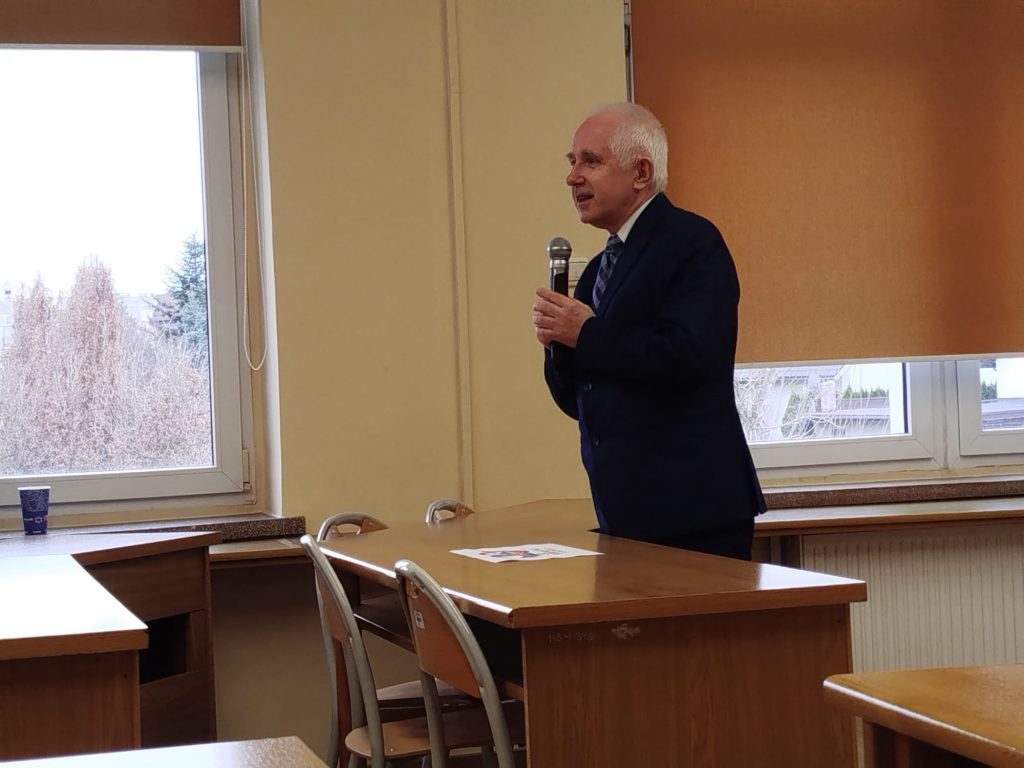
During the gathering, speeches were delivered by Professor Mieczysław Balowski, Dr. Estera Jasita (Director of the Institute of Languages and Translation Studies), Dr. Ivana Dobrotová, and alumni who shared memories of their student years.
Over the course of twenty years, the program has undergone dynamic development, adapting its educational offer to changing educational, social, and labor-market realities. In the coming academic year, plans include further internationalization of studies, including the teaching offer (recruitment for a new degree program, Czech Language in Translation Practice, will begin in May), as well as deeper cooperation with foreign partners.
Czech Studies remains an important element in building Polish-Czech relations in the region and in developing students’ intercultural competencies. The best proof of this is the fact that more than 50 percent of the graduates attending the anniversary celebration maintain active professional contact with the Czech language.